

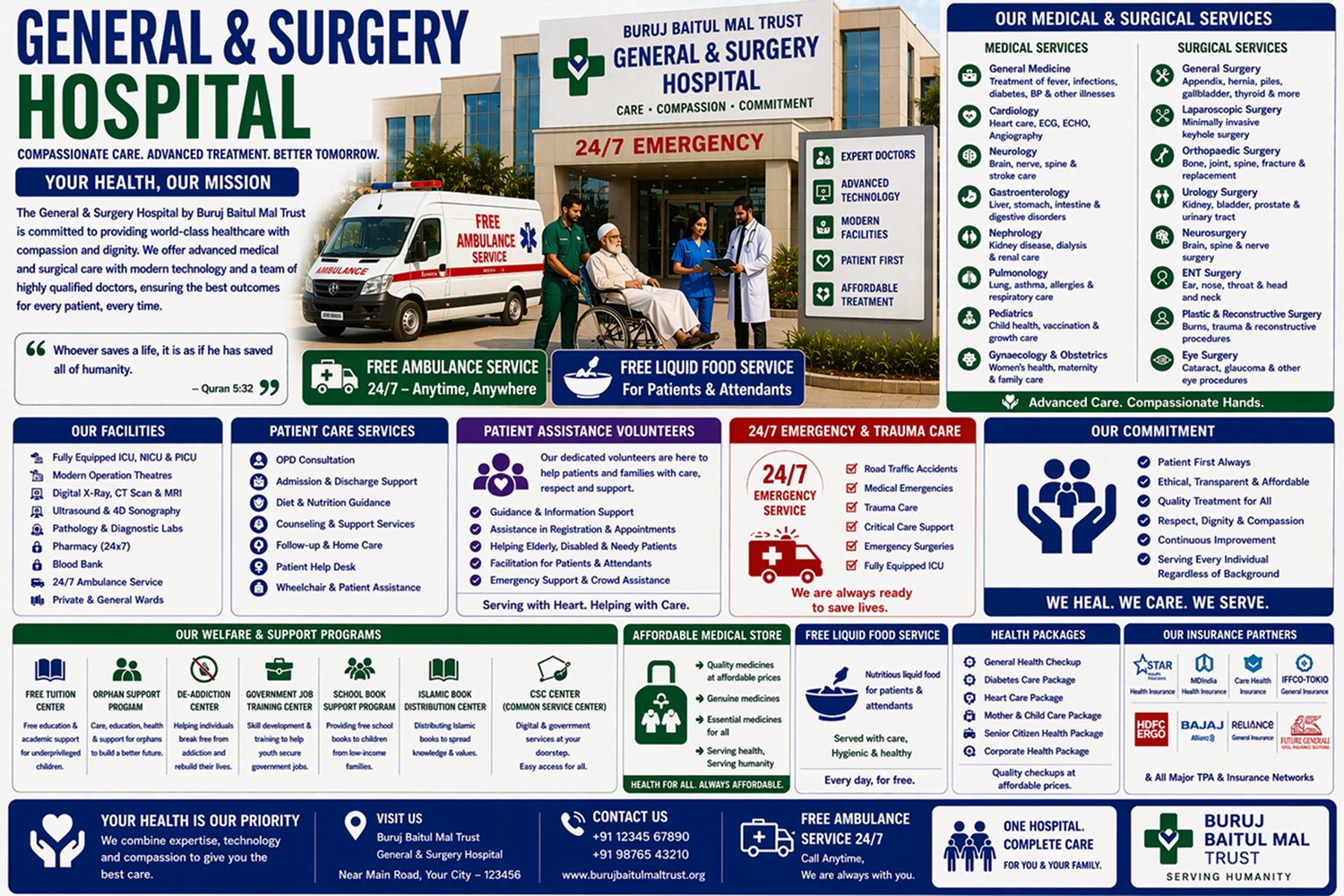
We will start these services (in future) through your donation.
Nowadays, the number of patients visiting government hospitals is extremely high. Most patients belong to the poor, traveling from villages, towns, and remote areas to major city hospitals for treatment. However, when they arrive, they are unaware of the hospital system, registration, how to meet a doctor, the process of obtaining reports or medications. This leaves them distressed, and their problems are compounded by the lack of guidance.
This is why the idea of having “Buruj Rogi Khidmatgar” (helpers) in these hospitals can prove to be very important and compassionate. These Khidmatgars will be people who will be present inside the hospital to assist patients. Their job will be to direct the patient to the correct counter, help them fill out forms, take them to the doctor, guide them through tests or reports, and provide medication if needed.
Why is a servant needed?
Thousands of people come to government hospitals every day for treatment. Many patients are elderly, illiterate, or suffering from illnesses.
They are vulnerable. Often, they don’t even have a relative to help them. From registration to doctor visits, waiting in long lines, filling out forms, and handling report files—all of this is incredibly difficult. In such situations, having a caregiver present who treats them with compassion and empathy can bring comfort to the patient and make the treatment process easier.
Who will be the servants:
These volunteers will be young people with a passion for social service. They will be paid by the organization for this work. They will receive basic training on how to navigate the hospital system, interact with patients, and direct them to the right place. They will have an identification card so that both staff and patients can be assured that they are government-verified helpers.
Duties of a servant
- Getting the patient registered.
- Carrying elderly and weak patients to the doctor’s room in a wheelchair.
- Transporting patients to the correct department for blood tests, X-rays, or other tests.
- After receiving the report, explain to them what the next step will be.
- Sending the medicine to the correct counter for collection.
- Providing information about hospital accommodation and canteens to patients arriving from outside.
Benefits of having a servant:
Patients’ problems will be reduced. Hospitals will maintain a disciplined and peaceful atmosphere. Doctors and nurses will save time because attendants will handle many menial tasks. Elderly and illiterate patients will receive easier treatment. A spirit of humanity and helpfulness will increase in society.
Moral and Human Aspects:
The duty of a caretaker is not only to provide assistance, but also to impart a lesson in humanity. When a patient is alone in a strange city and someone kindly helps them, they never forget that moment.
This is a very good service to humanity.